Mad About Books Donates 400 Books
Bookstore contributes to Ottawa Rotary Book Drive
30 November 2005 (Oglesby, Illinois) – What do the less fortunate children of our community have to look forward to this holiday season? Books!
As part of the annual Ottawa Festival of Lights Parade, the Ottawa Sunrise Rotary Club sponsors a float which collects from generous spectators toys, books and donations for less fortunate children ages 0-12. In an effort to help one of the Rotary International projects, fighting illiteracy, Mad About Books offered to match the number of books collected at this year’s parade. Since turnout was light, apparently due to the blustery weather, and only 184 books were donated, Mad About Books is bettering their initial offer to help cover some of the shortfall, with a contribution of 400 books.
“We think it’s important for every child to read,” says bookstore owner Sharon-Fay Hill, “because literacy is the first step toward a life of success.”
Eldon Leemhuis of the Ottawa Sunrise Rotary Club emphasizes, “if we get the books in the hands of children whose parents are having trouble making ends meet, we are helping the education process of those who need it most.”
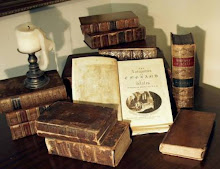
Mad About Books, located on Walnut Street in Oglesby, sells used, as well as rare and collectible, books. Since opening in June 2005, they have made donations to the Oglesby Public Library, LaSalle Veterans Home, LaSalle Healthcare Center, Salvation Army in LaSalle, and Shelter Care Ministries in Rockford. The books collected by the Ottawa Sunrise Rotary Club will be given to the Ottawa Salvation Army office to distribute with their Christmas food baskets.
“We believe giving in our community is the right thing to do,” says bookstore owner Jeff Hill. “And books make great gifts.”
Mad About Books will make a formal presentation of books to the Ottawa Sunrise Rotary Club on Friday 2 December at 7:15am at Ottawa Community Hospital.
For more information about the Ottawa Sunrise Rotary Club, email leemhuis@theramp.net
For more information about Mad About Books, email info@madaboutbooksonline.com.
Wednesday, November 30, 2005

Sunday, November 27, 2005
Chapter Sixty-Three, in which the Slaves of Golconda are introduced
Coleridge divides readers into four kinds. The first three he believes are to varying degrees lazy, casual, and inattentive. "The fourth," he says, "is like the slaves in the diamond mines of Golconda, who, casting aside all that is worthless, retain only pure gems."
Over the past few months Your Bibliothecary has become acquainted with many thoughtful and articulate readers who regularly share their insights on their own blogs. Each is after one thing in their reading, and have a compulsion to pursue it. Nearly every day one can find reactions to a literary classic, a new release, a modern romance, a poem, a pop-up book--the variety is endless. We thought it might be interesting to gather these readers who toil without recompense in search of the crystalline truth, and all mine the same book at the same time.
The first book on the agenda is Chronicle of a Death Foretold, by Gabriel Garcia Marquez. Each person will be reading this over the next few weeks and collecting thoughts. On Sunday 18 December each person will post their reactions to this book on their own blog, in their own personal style. Discussion may ensue.
This event is open to anyone who wants to participate. Registration is not necessary; simply read the book and blog about it on the designated day. And if your reading is not as the sand in the hour-glass, or the sponge, or the jelly-bag, then you may truly join the eminent ranks of the Slaves of Golconda.
Over the past few months Your Bibliothecary has become acquainted with many thoughtful and articulate readers who regularly share their insights on their own blogs. Each is after one thing in their reading, and have a compulsion to pursue it. Nearly every day one can find reactions to a literary classic, a new release, a modern romance, a poem, a pop-up book--the variety is endless. We thought it might be interesting to gather these readers who toil without recompense in search of the crystalline truth, and all mine the same book at the same time.
The first book on the agenda is Chronicle of a Death Foretold, by Gabriel Garcia Marquez. Each person will be reading this over the next few weeks and collecting thoughts. On Sunday 18 December each person will post their reactions to this book on their own blog, in their own personal style. Discussion may ensue.
This event is open to anyone who wants to participate. Registration is not necessary; simply read the book and blog about it on the designated day. And if your reading is not as the sand in the hour-glass, or the sponge, or the jelly-bag, then you may truly join the eminent ranks of the Slaves of Golconda.
Thursday, November 24, 2005
Chapter Sixty-Two, in which We mark Thanksgiving
"Our harvest being gotten in, our governor sent four men on fowling, that so we might after a special manner, rejoice together after we had gathered the fruits of our labors."
Today we mark a holiday that is not political, and yet has a distinctly American flavor, second only to Independence Day; not religious, and yet, as the name indicates, often features prayers of thanks; and not invented, like Mother's Day, though the day was arbitrarily set long after the event it was meant to commemorate.
Football and parades being attached to this day only recently, the main observance of the holiday is the meal, a re-creation and remembrance of the first harvest in 1621 at Plymouth Colony, as noted in the above quote by Edward Winslow (first colonial groom and future governor); and therein lies the beauty of the holiday.
Though President Lincoln officially established the last Thursday of November as a national day to give thanks, the basis of the day has one element that is a standard feature of many religious celebrations. Harvest festivals are traditional in cultures throughout the world. For Christians in particular, thank offerings abound in the Bible, and the communal meal is the first noticeable feature of early Jewish-Christian worship, a supper party of fellowship, which usually took place in the homes of followers. Besides the passover Seder feast, a meal offering of thanks to God which antedated Moses, Jesus often participated in communal meal sharing with publicans and harlots, a bringing-together of diverse peoples just as the colonists and native Americans of this country would do many hundreds years later.
When you sit to Thanksgiving dinner today, take a moment to reflect on the sacredness of the meal. No special class of person is required to perform the rites of blessing or feeding. No special place is required. The holiday is truly one of fellowship. When you pass the potatoes or turkey, you are testifying to a community, not by words or faith, but by deed.
Thanksgiving conjures images of Pilgrims, football, and harried days of shopping madness. Behind it all, whether we are aware or not, we carry on the tradition of the communal share-meal. In secular form we all rejoice together.
Wednesday, November 16, 2005
Chapter Sixty-One, in which Knowledge is truly shared
And now, back to the subject of Google.
If you have just tuned in, Chapter Forty-Six offered a rousing defense, embellished with gratuitous sex and violence, of Google's plans to digitize books. The thoughts of Your Bibliothecary then were on one's enhanced abilities to search and find information one is looking for.
While casually browsing Anirvan's Bookfinder Journal, we followed some binary breadcrumbs and arrived at a discussion of metadata by David Weinberger. What is metadata? Basically, it refers to the way we organize information such as books. Read the entire article if you are interested, but it matters little to our point here.
With only a passing mention, and a brief follow-up at the end, Weinberger notes what we now believe could be the most important benefit of a complete digitization of all books. If this is not in Google's plans, it needs to be.
Imagine Google has digitized a book Tiresias has written about farm implements. A student in Estonia searches for some keywords, and he is sent to the relevant snippet from Tiresias' book. As we understand the program now, the student will also find a link to be able to purchase Tiresias' book if he needs more information from it.
Let's say he acquires this book, and finds it lacking some important information, information the student from Estonia possesses, but which Tiresias had been unable to obtain in his own research. The way the wheel spins now, the student from Estonia will write and publish his own book with more thorough information. Or perhaps he will contact Tiresias, who will then be able to publish a revised edition with the updated information. But what if the student was able to add comments and annotations to the complete digital text?
How amazing would it be for us to publish Chapter Sixty-One and then return to it four weeks later to find it has been fully annotated and duly expanded by everyone with an interest in the subject and access to the Internet?
This is how we see a true sharing of information. This is what Weinberger suggests is the cause of publisher's fears over Google's plan. The process needs refinement far beyond the simple "post and comment" routine of blogs, and perhaps the technology is not yet even available. But by this, everyone with knowledge on a subject can participate in the exchange of information, and the growth of knowledge will be at the speed of the digital age.
If you have just tuned in, Chapter Forty-Six offered a rousing defense, embellished with gratuitous sex and violence, of Google's plans to digitize books. The thoughts of Your Bibliothecary then were on one's enhanced abilities to search and find information one is looking for.
While casually browsing Anirvan's Bookfinder Journal, we followed some binary breadcrumbs and arrived at a discussion of metadata by David Weinberger. What is metadata? Basically, it refers to the way we organize information such as books. Read the entire article if you are interested, but it matters little to our point here.
With only a passing mention, and a brief follow-up at the end, Weinberger notes what we now believe could be the most important benefit of a complete digitization of all books. If this is not in Google's plans, it needs to be.
Imagine Google has digitized a book Tiresias has written about farm implements. A student in Estonia searches for some keywords, and he is sent to the relevant snippet from Tiresias' book. As we understand the program now, the student will also find a link to be able to purchase Tiresias' book if he needs more information from it.
Let's say he acquires this book, and finds it lacking some important information, information the student from Estonia possesses, but which Tiresias had been unable to obtain in his own research. The way the wheel spins now, the student from Estonia will write and publish his own book with more thorough information. Or perhaps he will contact Tiresias, who will then be able to publish a revised edition with the updated information. But what if the student was able to add comments and annotations to the complete digital text?
How amazing would it be for us to publish Chapter Sixty-One and then return to it four weeks later to find it has been fully annotated and duly expanded by everyone with an interest in the subject and access to the Internet?
This is how we see a true sharing of information. This is what Weinberger suggests is the cause of publisher's fears over Google's plan. The process needs refinement far beyond the simple "post and comment" routine of blogs, and perhaps the technology is not yet even available. But by this, everyone with knowledge on a subject can participate in the exchange of information, and the growth of knowledge will be at the speed of the digital age.
Monday, November 14, 2005
Chapter Sixty, in which We find Ourselves in the digital Renaissance
What do Erasmus, Bacon, Jonson, Milton, and Locke have in common with Sylvia, Julie, Ella, Stefanie, and Your Bibliothecary?
The Renaissance provided the backdrop for the height of popularity of what is known as the commonplace book. The times had seen a sudden flood of information, and commonplace books became one means of organizing and remembering items of personal significance. Wikipedia broadly defines commonplace books as "essentially scrapbooks filled with items of every kind: medical recipes, letters, poems, tables of weights and measures, proverbs, prayers, legal formulas."
The term was originally one of rhetoric, signifying a passage that could be generally applied in the locus communis, or the common place. By using these books to record items of particular interest, readers became the center of their own books, what Barbara M. Benedict, in Making the Modern Reader: Cultural Mediation in Early Modern Literary Anthologies, calls "the locus of meaning from which the collected texts differ." For the average reader who recorded their thoughts and criticisms with each passage, these books became a social skill as well as a personal pleasure. And though many modern researchers pay them scant attention, such commonplace books are printed guides to the cultures of their times.
The 2001 exhibition Commonplace Books: Manuscripts and Printed Books from Antiquity to the Twentieth Century, at the Beinecke Library at Yale University featured the collections of Seneca, Saint Bernard de Clairvaux, John Locke, Edward Gibbon, and W.H. Auden among many others. But, in Bell's Common Place Book, for the Pocket: Form'd generally upon the Principles Recommended and Practiced by Mr. Locke (London: 1770), John Bell noted that a commonplace book
Dougj provides a fine explanation of commonplace books, and how to make and use one, in One and Two parts. His site also gives one a good sense of how a commonplace book was normally organized, with each entry indexed by heading for easy reference. He cites Robert Darnton ("Extraordinary Commonplaces," The New York Review of Books, December 21, 2000), who said that, for compilers of commonplace books, reading and writing were inseperable acts in an effort to make sense of things. In other words, keeping a commonplace book was a way of damming up the stream of experience and swimming in it, another necessary act of devotion.
Darnton goes on to say that "commonplacing as a practice probably began in the twelfth century and remained widespread among the Victorians. It disappeared long before the advent of the sound bite." Perhaps he hasn't visited any of the blogs Your Bibliothecary noted at the start. What more is there to blogging than copying a pithy passage under an appropriate heading and adding observations made in the course of daily life?
The allure of the weblog today is the same as the allure of Bell's blank manuscript books that offered a person the opportunity to participate in printed culture, both as writers and readers of their own identity. His quote, too, would fit well in any blog's "ABOUT" category. Thus we come to know ourselves and one another with each blog entry, posting, or chapter--literal entries into the thoughts and feelings of the person who wrote them.
We embrace the digital age and call it our own, but the roots are firmly planted in the Renaissance, and we find ourselves now still coming to understand the universe and our place in it by means no different than people did then.
The Renaissance provided the backdrop for the height of popularity of what is known as the commonplace book. The times had seen a sudden flood of information, and commonplace books became one means of organizing and remembering items of personal significance. Wikipedia broadly defines commonplace books as "essentially scrapbooks filled with items of every kind: medical recipes, letters, poems, tables of weights and measures, proverbs, prayers, legal formulas."
The term was originally one of rhetoric, signifying a passage that could be generally applied in the locus communis, or the common place. By using these books to record items of particular interest, readers became the center of their own books, what Barbara M. Benedict, in Making the Modern Reader: Cultural Mediation in Early Modern Literary Anthologies, calls "the locus of meaning from which the collected texts differ." For the average reader who recorded their thoughts and criticisms with each passage, these books became a social skill as well as a personal pleasure. And though many modern researchers pay them scant attention, such commonplace books are printed guides to the cultures of their times.
The 2001 exhibition Commonplace Books: Manuscripts and Printed Books from Antiquity to the Twentieth Century, at the Beinecke Library at Yale University featured the collections of Seneca, Saint Bernard de Clairvaux, John Locke, Edward Gibbon, and W.H. Auden among many others. But, in Bell's Common Place Book, for the Pocket: Form'd generally upon the Principles Recommended and Practiced by Mr. Locke (London: 1770), John Bell noted that a commonplace book
...is not solely for the Divine, the Lawyer, the Poet, Philosopher, or Historian. . . . It is for the use and emolument of the man of business as well as of letters; for men of fashion and fortune as well as of study; for the Traveller, the Trader, and in short for all those who would form a system of useful and agreeable knowledge, in a manner peculiar to themselves, while they are following their accustomed pursuits, either of profit or pleasure.
Dougj provides a fine explanation of commonplace books, and how to make and use one, in One and Two parts. His site also gives one a good sense of how a commonplace book was normally organized, with each entry indexed by heading for easy reference. He cites Robert Darnton ("Extraordinary Commonplaces," The New York Review of Books, December 21, 2000), who said that, for compilers of commonplace books, reading and writing were inseperable acts in an effort to make sense of things. In other words, keeping a commonplace book was a way of damming up the stream of experience and swimming in it, another necessary act of devotion.
Darnton goes on to say that "commonplacing as a practice probably began in the twelfth century and remained widespread among the Victorians. It disappeared long before the advent of the sound bite." Perhaps he hasn't visited any of the blogs Your Bibliothecary noted at the start. What more is there to blogging than copying a pithy passage under an appropriate heading and adding observations made in the course of daily life?
The allure of the weblog today is the same as the allure of Bell's blank manuscript books that offered a person the opportunity to participate in printed culture, both as writers and readers of their own identity. His quote, too, would fit well in any blog's "ABOUT" category. Thus we come to know ourselves and one another with each blog entry, posting, or chapter--literal entries into the thoughts and feelings of the person who wrote them.
We embrace the digital age and call it our own, but the roots are firmly planted in the Renaissance, and we find ourselves now still coming to understand the universe and our place in it by means no different than people did then.
Sunday, November 13, 2005
Chapter Fifty-Nine, in which We learn to dam the Stream
In Pipefuls (which I have just finished enjoying), Christopher Morley quotes his own John Mistletoe on the passing of time, the flow of one's experiences like a river: "The urgent necessity is to dam the stream here and there so we can go swimming in it."
I can think of two quite pleasurable ways of damming this stream: reading and writing.
Reading (unless you are Evelyn Wood) causes us to absorb words one by one. An experience being described usually takes more time than the actual experience itself--think of the description of a fistfight in any western novel--and with possible intrusions of feelings, reactions, or other viewpoints, events that might pass as quickly as a day in the life of Leopold Bloom can take 1076 pages to recount. Reading allows one to savor a story, and slip deep inside a character, in a way a two-hour film can not.
Writing forces one to slow down even more. To write about an event, one must reflect upon it, think for a while, try to come to the essence of the thing so that words, once set on paper, will convey that experience as fully as possible. In a way, writing about an event causes us to relive it, even rescue it and preserve it, safe from the raging flow of time.
Dam the stream: Read and Write!
I can think of two quite pleasurable ways of damming this stream: reading and writing.
Reading (unless you are Evelyn Wood) causes us to absorb words one by one. An experience being described usually takes more time than the actual experience itself--think of the description of a fistfight in any western novel--and with possible intrusions of feelings, reactions, or other viewpoints, events that might pass as quickly as a day in the life of Leopold Bloom can take 1076 pages to recount. Reading allows one to savor a story, and slip deep inside a character, in a way a two-hour film can not.
Writing forces one to slow down even more. To write about an event, one must reflect upon it, think for a while, try to come to the essence of the thing so that words, once set on paper, will convey that experience as fully as possible. In a way, writing about an event causes us to relive it, even rescue it and preserve it, safe from the raging flow of time.
Dam the stream: Read and Write!
Thursday, November 10, 2005
Chapter Fifty-Eight, in which Leander desires Erato
Leander is not the type of man who talks about his feelings, so Your Bibliothecary must talk about them for him.
For all you first-time Readers, Leander and Erato are two of our dearest friends. Both are writers, and we have all shared many a literary experience together. They have previously appeared in Chapter Fifty-Two as two of the four unknown contest judges. They also share a famous, on-again/off-again romance--on because Erato can behave with knee-buckling appeal when she wants to, and off because she often wants to with more than one man. Morals and analysis aside, they are a fine couple when together.
Many years before meeting Erato, Leander saw a film that he considered brilliant. The name doesn't matter--what matters is his appreciation of the performance of the leading actress. So moved, he even went on to write a biography on the character from the film.
Fast forward, if you will, to last weekend: Leander and Erato find time to rent a movie. Leander suggests that film that touched him so, and to his surprise Erato had never seen it. Well, she has to see it. (Remember, Ladies, often one of the only ways a man will share his feelings with you is through his appreciation of a film, book, or work of art.)
Leander recounted all this at lunch the other day, in what seemed like fewer than ten words. We have, not so much embellished it--he embellished it with an abundance of detail concerning the rest of their weekend together--but edited and translated it, so the meaning will become clearer. He captioned this snapshot of one part of their weekend by saying that the actress in the film seemed to him just like Erato.
We can tell you there is some resemblance in appearance between said actress and said lover. And having seen the film, we can affirm that the actress displays some mannerisms and ways of bearing that are similar to Erato's, likely even more to one who knows her as Leander does. The film, he said, inspired quite a night.
This all brought us to thinking about why Leander is so drawn to Erato. Even when he is angry with her, he still desires her. Indeed, he excuses all her faults just to have as much of her as she will allow. Though we know Erato's charms to be powerful, there must be another reason, something deeper, a feeling that Leander won't discuss.
Is it possible that many years before meeting Erato, the actress in the film made a strong, searing impression on Leander? And is it possible that when he finally did meet Erato, she reminded him of the actress, though completely subconsciously? Is it possible that Erato fit perfectly into the impression left upon Leander by the actress, and that is what makes him so drawn to her? Was Leander somehow conditioned to want Erato to the exclusion of others?
Are all the hopes and desires of our mature years really only shadows of our younger years, attempts to fill the emptiness of our past?
For all you first-time Readers, Leander and Erato are two of our dearest friends. Both are writers, and we have all shared many a literary experience together. They have previously appeared in Chapter Fifty-Two as two of the four unknown contest judges. They also share a famous, on-again/off-again romance--on because Erato can behave with knee-buckling appeal when she wants to, and off because she often wants to with more than one man. Morals and analysis aside, they are a fine couple when together.
Many years before meeting Erato, Leander saw a film that he considered brilliant. The name doesn't matter--what matters is his appreciation of the performance of the leading actress. So moved, he even went on to write a biography on the character from the film.
Fast forward, if you will, to last weekend: Leander and Erato find time to rent a movie. Leander suggests that film that touched him so, and to his surprise Erato had never seen it. Well, she has to see it. (Remember, Ladies, often one of the only ways a man will share his feelings with you is through his appreciation of a film, book, or work of art.)
Leander recounted all this at lunch the other day, in what seemed like fewer than ten words. We have, not so much embellished it--he embellished it with an abundance of detail concerning the rest of their weekend together--but edited and translated it, so the meaning will become clearer. He captioned this snapshot of one part of their weekend by saying that the actress in the film seemed to him just like Erato.
We can tell you there is some resemblance in appearance between said actress and said lover. And having seen the film, we can affirm that the actress displays some mannerisms and ways of bearing that are similar to Erato's, likely even more to one who knows her as Leander does. The film, he said, inspired quite a night.
This all brought us to thinking about why Leander is so drawn to Erato. Even when he is angry with her, he still desires her. Indeed, he excuses all her faults just to have as much of her as she will allow. Though we know Erato's charms to be powerful, there must be another reason, something deeper, a feeling that Leander won't discuss.
Is it possible that many years before meeting Erato, the actress in the film made a strong, searing impression on Leander? And is it possible that when he finally did meet Erato, she reminded him of the actress, though completely subconsciously? Is it possible that Erato fit perfectly into the impression left upon Leander by the actress, and that is what makes him so drawn to her? Was Leander somehow conditioned to want Erato to the exclusion of others?
Are all the hopes and desires of our mature years really only shadows of our younger years, attempts to fill the emptiness of our past?
Subscribe to:
Posts (Atom)